What should go in a kid's smoothie?
On this page
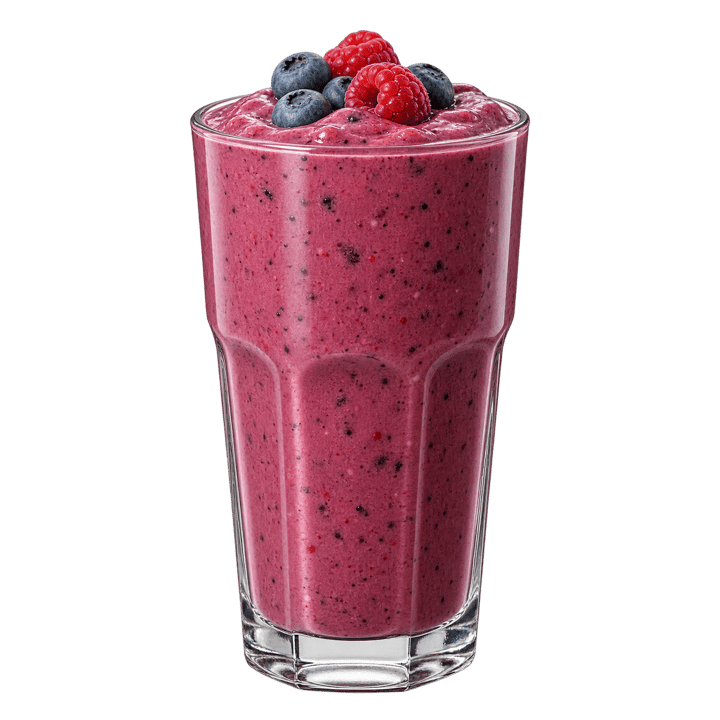
Milk or plain yogurt, one fruit, a handful of spinach, no added sugar and no powder. The US guidelines say to avoid added sugar for young children altogether. Half a cup of milk, half a banana, half a cup of frozen strawberries and a cup of spinach is 147 calories, with none of its sugar added.
A smoothie looks like the perfect way to get fruit and greens into a child, and it is. The trouble starts when it doesn’t taste sweet enough the first time, so in goes a spoon of honey or a splash of juice, and the green drink becomes a dessert. Some parents add protein powder too, to help a picky eater grow.
What we’d do
Keep it small, plain and unsweetened. Half a banana and some frozen berries make it sweet without anything added, and a cup of spinach disappears into the color. Use milk or plain yogurt (the guidelines call full-fat dairy important for children, so whole milk is a good choice), skip the juice, and leave the protein powder for adults.
Think of it as a kid’s portion at a restaurant. It’s the same real food as yours, in a smaller glass, minus the sweetener.
The kid’s glass


No added sugar A+
147 calories, 17 g sugar from the fruit and milk
The same, plus a spoon of honey
17 g added C+
211 calories, 17 g of it added sugar
What do the guidelines say about sugar for kids?
The 2025 to 2030 US guidelines say to “avoid added sugars during infancy and early childhood,” which they define as birth to 4 years. For ages 5 to 10, “no amount of added sugars is recommended.” Honey and fruit juice concentrate count as added sugar. The sugar in whole fruit and plain milk doesn’t.
There’s a second reason to skip honey for the youngest. The CDC says “do not feed honey to a child who is younger than 1 year old,” because honey can carry the bacteria that cause botulism.
Is juice OK in a kid’s smoothie?
We’d leave it out. The American Academy of Pediatrics says no juice before age 1 and 4 to 6 oz a day at most from ages 1 to 6, with 4 oz the top for toddlers aged 1 to 3. It says whole fruit is better than juice, and a smoothie already has the whole fruit in it. A cup of juice in the blender would use up more than a day’s allowance in one glass.
Should kids have protein powder?
No. A child eating normal meals gets protein from milk, yogurt, eggs and the rest of the day, and a powder adds nothing a cup of milk can’t. Consumer Reports’ 2025 tests also found more than two thirds of 23 powders and shakes carried more lead in a serving than its cautious daily level, and advised against daily use of most powders, even for adults.
What’s in the kid’s glass?
| Ingredient | Amount | Calories | Sugar |
|---|---|---|---|
| Milk | 1/2 cup | 61 | 6 g |
| Banana | 1/2 medium | 53 | 7 g |
| Frozen strawberries | 1/2 cup | 26 | 3 g |
| Spinach | 1 cup | 7 | 0 |
| The glass | 147 | 17 g, none added |
For an older or hungrier child, double the milk and add a spoon of plain yogurt. The builder has a kid setting that counts any added sugar against the Glucose meter, and its verdict for this glass is The Good Kid’s Glass.
For parents
Gyroscope is for adults 18 and older, so there’s no app for this one. These are the places we’d go for a child’s food, opened on November 15, 2026:
- HealthyChildren.org, Where We Stand: Fruit Juice for Children, from the American Academy of Pediatrics (updated July 27, 2022), with the juice limits by age.
- CDC, Foods and Drinks to Avoid or Limit (April 14, 2026), on added sugars, honey and juice for babies and toddlers.
And for anything about how your child is eating or growing, ask their pediatrician.
This page follows the 2025 to 2030 Dietary Guidelines for Americans, the American Academy of Pediatrics’ policy on fruit juice, the CDC’s advice on honey and infant botulism, and USDA food data, all checked on November 14, 2026. It’s general information about food, not medical advice. If your child has a food allergy, a medical condition or trouble growing, ask their pediatrician.
11 sources
- US Department of Agriculture and US Department of Health and Human Services, Dietary Guidelines for Americans, 2025 to 2030, January 2026cdn.realfood.gov
- Heyman MB, Abrams SA and the AAP Section on Gastroenterology, Hepatology, and Nutrition and Committee on Nutrition, Fruit juice in infants, children, and adolescents: current recommendations, Pediatrics, 2017pubmed.ncbi.nlm.nih.gov
- WTOP News, Stop giving your babies fruit juice, pediatricians' group says (the AAP's 2017 age limits for juice), May 2017wtop.com
- Centers for Disease Control and Prevention, Preventing botulismcdc.gov
- Centers for Disease Control and Prevention, Foods and Drinks to Avoid or Limit (infant and toddler nutrition), April 14, 2026cdc.gov
- HealthyChildren.org, American Academy of Pediatrics, Where We Stand: Fruit Juice for Children, updated July 27, 2022healthychildren.org
- Consumer Reports, Protein powders and shakes contain high levels of lead, October 14, 2025, updated January 8, 2026consumerreports.org
- USDA SR Legacy, milk, reduced fat, 2% (FDC 171267)fdc.nal.usda.gov
- USDA SR Legacy, bananas, raw (FDC 173944), via nutritionvalue.orgnutritionvalue.org
- USDA SR Legacy, strawberries, frozen, unsweetened (FDC 168173), via nutritionvalue.orgnutritionvalue.org
- USDA SR Legacy, spinach, raw (FDC 168462), via nutritionvalue.orgnutritionvalue.org