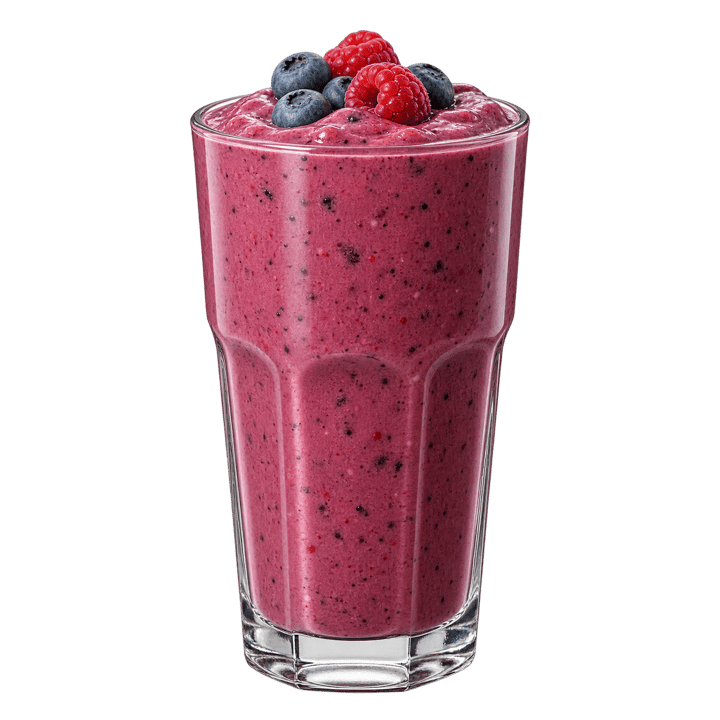
You need protein powder to make a protein shake
Short answerNo
On this page
No. A cup of 1% cottage cheese has 28 g of protein. A cup of 2% milk and 7 oz of plain Greek yogurt have 28 g between them. Soy milk and tofu work for a glass with no dairy. Seven of our top ten glasses reach the meal line (30 g at 165 lb) with no powder at all.
What we’d do
Make food your default protein: Greek yogurt and milk most days, cottage cheese when you want the most protein for the calories, soy milk and tofu if you skip dairy. Keep a tub of whey for the mornings it’s easier, and don’t use it every day. The glass tastes better thick with yogurt anyway.
If you remember three things
- Cottage cheese: 28 g a cup. Blended, the curds disappear.
- Milk plus Greek yogurt: 28 g. And the glass gets thick and creamy.
- Consumer Reports agrees. Its experts said no powder is necessary to hit your protein goals.
Why people believe it
The name does most of the work. A “protein shake” sounds like something that comes in a tub, and in a gym that’s how most of them are made. Powder ads show the scoop going into the shaker, and a scoop of whey really is the simplest way to put 25 g of protein in water. People who want more protein end up thinking the first step is buying a powder.
What 30 g looks like without one
Think of a scoop as the shortcut and food as the road. The shortcut is handy, and the road gets you to the same place with more to see on the way: calcium, vitamin B12 and a thicker glass.
| Glass base | Protein | Calories |
|---|---|---|
| 1 cup 1% cottage cheese | 28 g | 162 |
| 1 cup 2% milk and 7 oz plain nonfat Greek yogurt | 28 g | 239 |
| 1 cup unsweetened soy milk and 1/2 cup firm tofu | 29 g | 261 |
| 1 cup 2% milk and 6 oz plain nonfat Greek yogurt | 25 g | 222 |
| For comparison: a 32 g scoop of whey in water | 25 g | 113 |
Add fruit and a spoon of seeds or oats to any of the food bases and it reaches your line. Tofu labels vary a lot, so check yours.
Seven glasses with no powder
| Glass | Protein | Calories | Grade |
|---|---|---|---|
| Strawberry banana yogurt | 30 g | 396 | A |
| Tropical | 31 g | 409 | A |
| Green | 32 g | 385 | A |
| Cottage cheese berry | 37 g | 376 | A |
| Plant | 33 g | 462 | A |
| Peanut butter banana oat | 35 g | 564 | A |
| The bowl | 31 g | 461 | A |
Grades are from the six meters in Build your glass for a 165 lb adult, and all seven clear every line. The Gyroscope app personalizes your protein line.
What Consumer Reports said
When Consumer Reports tested 23 protein powders and shakes in 2025, most had more lead than its cautious daily level. Its chemist Tunde Akinleye said “We advise against daily use for most protein powders, since many have high levels of heavy metals and none are necessary to hit your protein goals.” Nicholas Burd, a professor of health and kinesiology at the University of Illinois Urbana-Champaign, put it more plainly: “You can 100 percent meet your protein demands by eating whole foods.” CR’s own tip was to make your own shakes by swapping the powder for high-protein foods like Greek yogurt.
Watch out for peanut butter
Peanut butter is the ingredient people expect to be the protein, and it isn’t much of one. A tablespoon has 3.6 g of protein and 96 calories, so you’d need about eight tablespoons, about 800 calories, to reach 30 g. Use it for flavor, and get the protein from milk, yogurt, cottage cheese or soy.
The best case for powder
A scoop does have real advantages. Whey has the most protein for the calories of anything here, 25 g in 113 calories. It blends into anything, and it’s the easy way to reach a high line, like 40 g at 220 lb. The 2018 review behind our meal line was written for people building muscle, and many of them use a scoop.
That’s why The Ultimate, our chocolate peanut butter shake, uses a scoop. We’d still pick a dairy one and keep it to some days, with food glasses the rest of the week.
3 sources
- Consumer Reports, Protein powders and shakes contain high levels of lead, October 14, 2025, updated January 8, 2026consumerreports.org
- USDA FoodData Central, SR Legacy rows by FDC ID: milk, 2% (171267), soy milk (175223), Greek yogurt, plain nonfat (170894), cottage cheese, 1% (173417), whey protein powder (173180), firm tofu (172475), peanut butter (172470), opened on nutritionvalue.orgnutritionvalue.org
- Schoenfeld BJ and Aragon AA, How much protein can the body use in a single meal for muscle-building? Implications for daily protein distribution, Journal of the International Society of Sports Nutrition, 2018pmc.ncbi.nlm.nih.gov