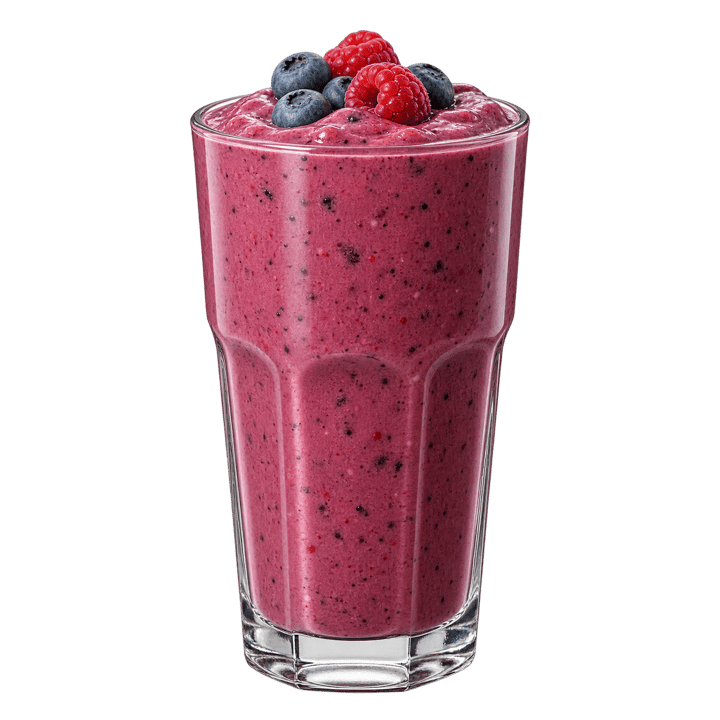
Greek yogurt or protein powder in a smoothie?
On this page
Both work. Six ounces of plain nonfat Greek yogurt brings 17 g of protein for 100 calories and makes the glass thick, and a scoop of whey brings about 25 g for 113. We’d use the yogurt most days and keep the scoop for when you need more protein than yogurt can fit.
Powder looks like the serious option, the thing people who take protein seriously use, and yogurt looks like a breakfast side. Gram for gram of protein they’re close. Powder is a little leaner, and yogurt is food, with the calcium, the thickness and none of the questions about what else is in the tub.
What we’d do
Make Greek yogurt the default. It turns a smoothie into something you could almost eat with a spoon, and a thick glass feels like more of a meal. Reach for a scoop when your line is high (a 220 lb adult needs 40 g in the glass, and the Gyroscope app personalizes yours) or when you want the most protein for the fewest calories. If you use powder, pick a dairy one and not every day, as Consumer Reports advises.
Yogurt and powder are like fresh tomatoes and tomato paste. Both bring the same thing to the pot, and one has had almost everything else taken out.
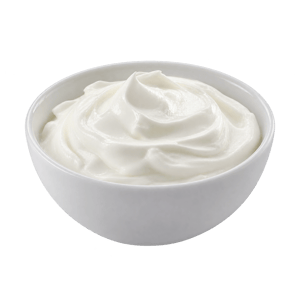
7 oz plain nonfat Greek yogurt
20 g of protein, 117 calories. A 6 oz cup has 187 mg of calcium (14% of the Daily Value) and 1.3 mcg of vitamin B12 (53%). About $1.07 at USDA’s November 2026 average advertised price.
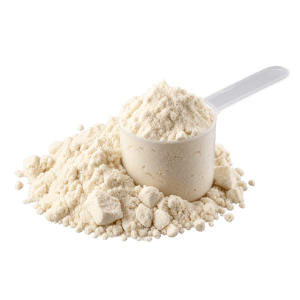
1 scoop of whey (32 g)
25 g of protein, 113 calories, 2 g of carbs. No federal price series exists, so the cost is whatever your tub says.
Which gives more protein per calorie?
Powder, by a little. Here’s what 30 g of protein costs each way.
| For 30 g of protein | Amount | Calories |
|---|---|---|
| Plain nonfat Greek yogurt | about 10 oz | 173 |
| Whey protein powder | about 1.2 scoops (38 g) | 136 |
That’s a 37-calorie difference, about a third of a banana. For most people trying to lose weight, the yogurt’s thickness does more for you than those calories cost, since in a 2016 MRI study a thick 100-calorie shake felt fuller after 40 minutes than a thin 500-calorie one.
What changes when you swap one for the other?
We graded three of our recipes both ways on the six meters at 165 lb (line 30 g).
| Recipe | With a scoop | With 7 oz Greek yogurt |
|---|---|---|
| The Ultimate | 41 g protein, A | 37 g protein, A+ |
| Mocha protein | 39 g protein, A | 34 g protein, A |
| Blueberry oat | 38 g protein, A | 34 g protein, A |
Yogurt works as a straight swap wherever there’s milk in the glass, and every version clears the line. The scoop gives more protein for the calories. The yogurt versions score a little higher overall, for two reasons you can see in the builder. Whey is on NOVA’s list of ingredients that make a food ultra-processed, so a scoop counts against the Processing meter (one scoop in a glass this size still passes). And yogurt makes the glass thick, which counts toward Hunger.
What about the lead in protein powder?
Consumer Reports tested 23 powders and shakes in 2025. More than two thirds had more lead in one serving than its 0.5 microgram daily level of concern, a cautious level with a wide safety margin. Plant powders averaged about nine times the lead of dairy ones, and it advised against daily use for most powders, while saying there’s “no reason to panic.” Our powders chapter has the full results.
How to make a protein shake without powder has three more ways to reach 30 g.
6 sources
- USDA SR Legacy, Greek yogurt, plain, nonfat (FDC 170894), via nutritionvalue.orgnutritionvalue.org
- USDA SR Legacy, whey protein powder (FDC 173180)fdc.nal.usda.gov
- USDA Agricultural Marketing Service, National Dairy Retail Report, Vol 93 No 45, November 6, 2026ams.usda.gov
- Consumer Reports, Protein powders and shakes contain high levels of lead, October 14, 2025, updated January 8, 2026consumerreports.org
- Camps G et al., Empty calories and phantom fullness: a randomized trial studying the relative effects of energy density and viscosity on gastric emptying determined by MRI and satiety, American Journal of Clinical Nutrition, 2016pubmed.ncbi.nlm.nih.gov
- US Food and Drug Administration, Daily Value on the Nutrition and Supplement Facts labelsfda.gov