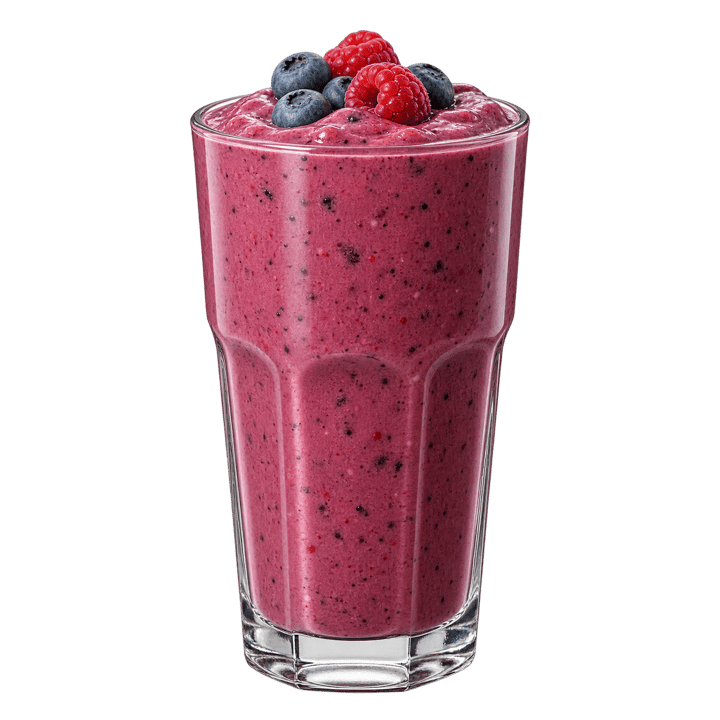
Is it OK to drink a smoothie every day?
On this page
Yes, if it’s a meal you’d be happy to eat every day. Keep the protein, fiber and whole fruit the same, and change the fruit and greens through the week, since each one covers different vitamins. If your protein comes from a powder, use food on some days.
The worry usually comes in one of three forms. Is that much fruit sugar every day too much? Is it bad to eat the same thing every morning? Is there something in the powder? The first one isn’t a problem if the fruit is whole and stops at two portions, since the US guidelines don’t count the sugar in whole fruit as added. The other two are fair questions, and the answers shape how we’d do it.
What we’d do
Keep a base you never think about, like a cup of milk and 7 oz of plain Greek yogurt, and rotate the fruit and greens across the week. Use a scoop of powder on some days and food on the others, because Consumer Reports advises against daily use of most powders. A daily glass is one of the easiest habits there is, since it’s the same food at the same time every morning.
Think of oatmeal. Plenty of people eat it every morning for years, and the ones who do it well change what goes on top.
Which ingredient covers which vitamin?
Each fruit and green brings something the others don’t. The percentages are shares of the FDA’s Daily Value, the number on food labels.
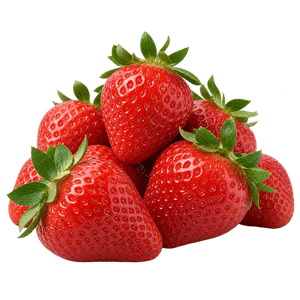
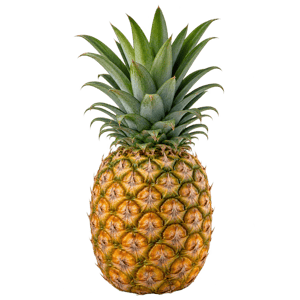
Vitamin C
A cup of frozen strawberries (5 oz) has 62 mg, 69% of the day. A cup of pineapple has 79 mg, 88%. A cup of mango has 60 mg, 67%.
Vitamin K and folate
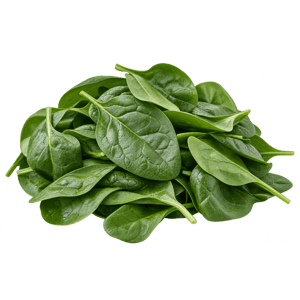
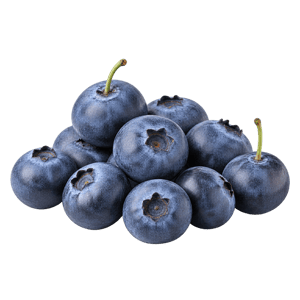
A cup of raw spinach has 145 mcg of vitamin K, 121% of the day, for 7 calories, and 58 mcg of folate, 15%. A cup of frozen blueberries has 25 mcg of vitamin K, 21%.
Calcium, B12 and vitamin D
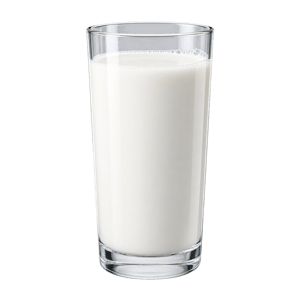
A cup of 2% milk has 293 mg of calcium (23%), 1.3 mcg of vitamin B12 (54%) and 2.9 mcg of vitamin D (15%).
Potassium and magnesium
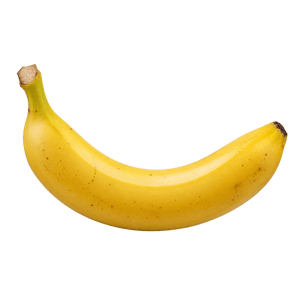
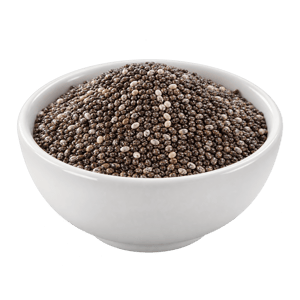
A medium banana has 422 mg of potassium (9%). Half an ounce of chia has 48 mg of magnesium (11%).
A glass of strawberries every day gives you plenty of vitamin C and almost no vitamin K. A green glass every day is the other way around. Rotate them and you get both.
A week of glasses
| Day | Glass | What it adds |
|---|---|---|
| Monday | Strawberry banana yogurt | vitamin C |
| Tuesday | Green, with spinach | vitamin K and folate |
| Wednesday | Tropical mango pineapple | vitamin C |
| Thursday | Blueberry oat | 12 g of fiber |
| Friday | Cottage cheese berry | 33 g of protein, no powder |
All five clear the six meters in our builder at 165 lb, so all five are A’s, and none has added sugar.
Is protein powder OK every day?
Consumer Reports tested 23 protein powders and shakes in 2025 and found more than two thirds had more lead in one serving than its daily level of concern, 0.5 micrograms, which is a cautious level with a wide safety margin. Plant powders averaged about nine times the lead of dairy ones. In its own words, “We advise against daily use for most protein powders.” It also said there’s “no reason to panic” and that even the worst products were far below the levels that cause immediate harm.
That’s an easy problem to design around. Greek yogurt, milk, cottage cheese, soy milk and tofu all get a glass to 30 g without a scoop, and our powders chapter covers the rest.
A note if you take warfarin
Leafy greens like spinach and kale can change how warfarin works. MedlinePlus says “do not change the amount of these foods and products you eat day-to-day or week-to-week.” If you take warfarin, keep the greens in your glass the same every day instead of rotating them, and talk to your provider before a big change.
Snap your shake once, then log it every morning with one tap. Here’s how that works in Gyroscope.
11 sources
- US Food and Drug Administration, Daily Value on the Nutrition and Supplement Facts labelsfda.gov
- Consumer Reports, Protein powders and shakes contain high levels of lead, October 14, 2025, updated January 8, 2026consumerreports.org
- MedlinePlus Medical Encyclopedia, Taking warfarinmedlineplus.gov
- USDA SR Legacy, strawberries, frozen, unsweetened (FDC 168173), via nutritionvalue.orgnutritionvalue.org
- USDA SR Legacy, pineapple, raw (FDC 169124), via nutritionvalue.orgnutritionvalue.org
- USDA SR Legacy, mangos, raw (FDC 169910), via nutritionvalue.orgnutritionvalue.org
- USDA SR Legacy, spinach, raw (FDC 168462), via nutritionvalue.orgnutritionvalue.org
- USDA SR Legacy, blueberries, frozen, unsweetened (FDC 173950), via nutritionvalue.orgnutritionvalue.org
- USDA SR Legacy, bananas, raw (FDC 173944), via nutritionvalue.orgnutritionvalue.org
- USDA SR Legacy, milk, reduced fat, 2% (FDC 171267)fdc.nal.usda.gov
- USDA SR Legacy, chia seeds, dried (FDC 170554), via nutritionvalue.orgnutritionvalue.org