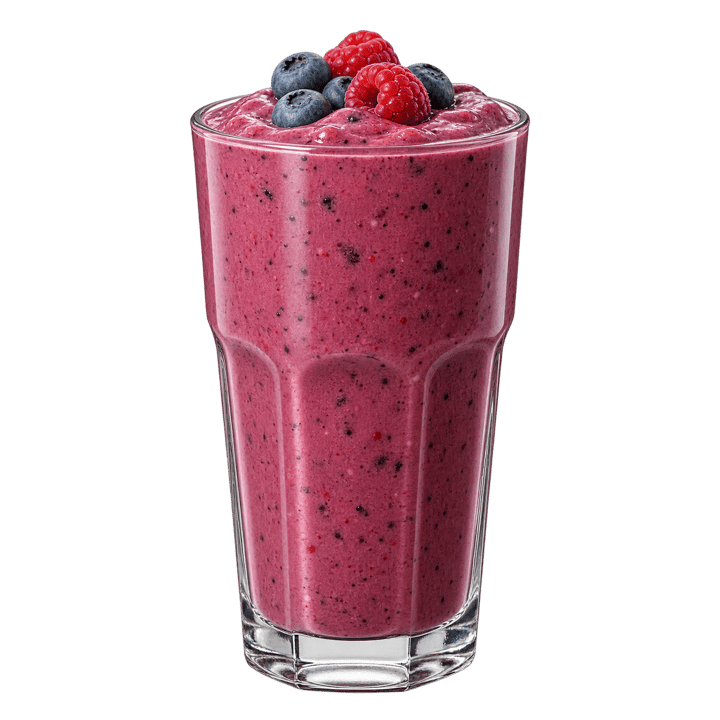
Calories in a smoothie, and how to make it lighter or bigger
On this page
A smoothie has exactly the calories you put in it, from about 150 for a small fruit glass to well over 800 for a big one with nut butter and oats. A glass built as breakfast lands around 350 to 550. You make it lighter by cutting the calories that don’t fill you, and bigger by adding the ones that are easy to drink.
What we’d do
Keep the calories that come with protein, fiber and fruit, and cut the ones that don’t. Juice, honey, syrup, ice cream and a second spoon of nut butter add calories fast and do little to keep you full. To go bigger, add milk, oats, a banana or a spoon of peanut butter, which add calories you can drink without feeling stuffed.
How many calories should a smoothie have?
If it replaces a meal, about as many as a meal. That’s your day’s calories divided by your meals, give or take a quarter. Below about half a meal, you’ll be hungry again soon, because your body barely notices calories you drink. In a 2000 study, 15 adults got about 450 extra calories a day for four weeks as soda and four weeks as jelly beans. In the jelly bean weeks they ate less of everything else to make up for it, and in the soda weeks they didn’t.
| Calories a day | A meal (3 a day) | A smoothie meal, from half to the top |
|---|---|---|
| 1,600 | about 530 | 270 to 670 |
| 2,000 | about 670 | 330 to 830 |
| 2,400 | about 800 | 400 to 1000 |
| 2,800 | about 930 | 470 to 1170 |
These are the same lines the builder grades the Energy meter on. A smoothie after a workout or beside a meal sits outside this, so it can be smaller. Gyroscope personalizes yours.
What each ingredient adds
One serving of each, from USDA’s numbers.
| Ingredient | Amount | Calories | Protein |
|---|---|---|---|
| Water | 1 cup | 0 | 0 |
| Unsweetened almond milk | 1 cup | 39 | 1 g |
| Nonfat milk | 1 cup | 83 | 8 g |
| Oat milk | 1 cup | 110 | 2 g |
| 2% milk | 1 cup | 122 | 8 g |
| Whole milk | 1 cup | 149 | 8 g |
| Orange juice | 1 cup | 112 | 2 g |
| Honey | 1 tbsp | 64 | 0 |
| Oats | 1/4 cup | 76 | 3 g |
| Peanut butter | 1 tbsp | 96 | 4 g |
| Banana | 1 medium | 105 | 1 g |
| Medjool dates | 2 | 132 | 1 g |
| Whey protein | 1 scoop | 113 | 25 g |
| Plain nonfat Greek yogurt | 7 oz | 117 | 20 g |
| Vanilla ice cream | 1/2 cup | 133 | 2 g |
| Walnuts | 1 oz | 185 | 4 g |
The liquid alone can move a glass by 150 calories, from water to whole milk. A spoon of peanut butter is nearly 100, and two Medjool dates are more than a banana.
How to make a smoothie lighter
Here’s a big shop-style glass next to a lighter one with the same banana, strawberries and peanut butter taste.
Ice cream and honey


The shop-style glass C
669 calories, 19 g protein, 8 g fiber, 31 g added sugar
Greek yogurt, no honey

The lighter glass A
440 calories, 33 g protein, 5 g fiber, no added sugar
The lighter glass has 229 fewer calories and 14 g more protein, with the same flavors. Four swaps did it.
- Greek yogurt for the ice cream. About the same calories, 18 g more protein and no added sugar.
- Leave out the honey. 64 calories, all of it added sugar. The banana and strawberries are sweet enough.
- Half the banana. 52 calories less.
- One spoon of peanut butter, not two. 96 calories less, and you still taste it.
Other swaps that cut calories without losing the meal: water or unsweetened almond milk in place of juice (up to 112 calories), nonfat milk for 2% (39 less with the same protein), and stopping at two portions of fruit. Thicken with frozen fruit and Greek yogurt instead of ice, since a thick glass keeps you fuller. In a 2016 MRI study, people felt fuller after a thick 100 calorie shake than a thin 500 calorie one.
Don’t go too light if the glass is a meal. Our breakfast scoop below is 416 calories, already a good size for a meal on a 1,600 calorie day. Cutting it further would leave you hungry by mid-morning.
How to make a smoothie bigger
For gaining weight, or for a big training day, add calories that are easy to drink. Here’s the same breakfast scoop, then the big version.
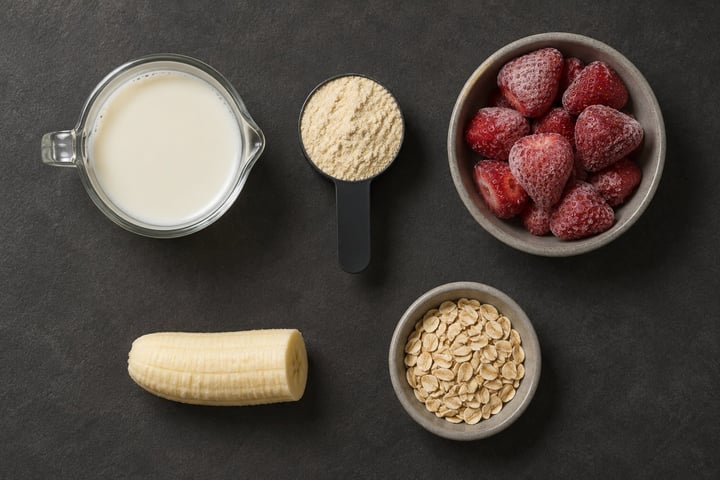
The everyday glass
The breakfast scoopA
A scoop in a cup of 2% milk, strawberries, half a banana and oats.
416 calories, 37 g protein, 8 g fiber, no added sugar, $2.59 a glass
For a 2,800 calorie day
The big scoopA
Whole milk, a whole banana, twice the oats and a spoon of peanut butter.
742 calories, 48 g protein, 12 g fiber, no added sugar, $2.93 a glass
 1½ cups whole milk366 g
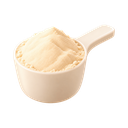 1 scoop whey32 g
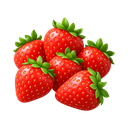 1 cup frozen strawberries150 g
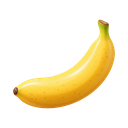 1 banana118 g
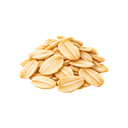 2 × 1/4 cup oats40 g
 1 tbsp peanut butter16 g
That’s 326 calories more from four changes.
- Whole milk, and more of it. A cup and a half of whole milk is 224 calories, against 122 for a cup of 2%.
- A whole banana. 52 calories more and it gets thicker.
- Twice the oats. Half a cup is 152 calories and 5 g of protein, 76 more than a quarter cup, and you won’t taste them.
- A spoon of peanut butter. 96 calories.
A smoothie for gaining weight works the opposite way to one for losing it. You add it next to your meals, and it can be big, since liquid calories don’t fill you up the way food does. Protein shake recipes by goal has two big glasses, of about 850 and 890 calories.
What about the chains?
A chain smoothie’s calories come mostly from its size and what’s added. A 20 oz Hulk Strawberry at Smoothie King is 820 calories and a 20 oz Gladiator Strawberry is 220, from the chain’s own pages. How many calories are in a smoothie? has the chain sizes side by side.
8 sources
- USDA FoodData Central, rows by FDC ID: milk 2% (171267), nonfat (171269) and whole (171265), almond milk (174832), oat milk (2705412), orange juice (169098), honey (169640), peanut butter (172470), banana (173944), oats (173904), Greek yogurt (170894), Medjool dates (168191), walnuts (170187), opened November 14 and 16, 2026fdc.nal.usda.gov
- Gebhardt SE and Thomas RG, Nutritive Value of Foods, USDA Home and Garden Bulletin 72, 2002 (vanilla ice cream, item 112)ars.usda.gov
- Camps G et al., Empty calories and phantom fullness: a randomized trial studying the relative effects of energy density and viscosity on gastric emptying determined by MRI and satiety, American Journal of Clinical Nutrition, 2016pubmed.ncbi.nlm.nih.gov
- DiMeglio DP and Mattes RD, Liquid versus solid carbohydrate: effects on food intake and body weight, International Journal of Obesity, 2000pubmed.ncbi.nlm.nih.gov
- Rolls BJ, The relationship between dietary energy density and energy intake, Physiology and Behavior, 2009pmc.ncbi.nlm.nih.gov
- US Department of Agriculture and US Department of Health and Human Services, Dietary Guidelines for Americans, 2025 to 2030, January 2026cdn.realfood.gov
- US Bureau of Labor Statistics, Average Price Data, US city average, October 2026bls.gov
- Walmart.com, online prices for each other item named on the page, opened November 16, 2026walmart.com