How much sugar is in a smoothie, and which kind counts?
On this page
Sugar from whole fruit and plain milk isn’t added sugar. Honey, syrup, juice concentrate, turbinado and table sugar are, and the 2025 to 2030 US guideline says one meal should have no more than 10 g of added sugar. Most of our top ten glasses have 16 to 40 g of sugar, none of it added. A 20 oz Caribbean Way has 83 g, and 50 of them are added.
People argue about smoothie sugar from two sides. One side says a smoothie is a sugar bomb, since sugar is sugar and a glass of fruit is full of it. The other says it’s all natural, so it doesn’t count, and a spoon of honey makes it healthier. The US guideline settles most of it, and it lands between the two.
What we’d do
Aim for no added sugar at all, and let a frozen banana or mango do the sweetening. Stop at two portions of fruit, and skip the juice. When you buy a smoothie, look for the added sugar on the label, and if the chain doesn’t print it, check the ingredients for juice, juice concentrate, turbinado, sherbet or honey.
If you remember three things
- 10 g of added sugar is a whole meal’s line. One tablespoon of honey is 17 g.
- Fruit and milk sugar don’t count as added. But two portions of fruit already bring about 20 to 37 g, so stop there.
- A teaspoon is 4.2 g. A 12 oz cola has about 9 teaspoons, and a 20 oz Caribbean Way about 20.
Two kinds of sugar
The January 2026 guideline draws the line in one sentence: “Some foods and drinks, such as fruits and plain milk, have naturally occurring sugars. The sugars in these foods are not considered added sugars.” Everything poured or spooned in is added, and the guideline’s list of names includes honey, agave syrup, cane sugar, turbinado sugar and fruit juice concentrate.
Then it sets the line: “While no amount of added sugars or non-nutritive sweeteners is recommended or considered part of a healthy or nutritious diet, one meal should contain no more than 10 grams of added sugars.”
That’s where the chain cups get into trouble. Smoothie King’s Caribbean Way, Angel Food and Hulk Strawberry all list turbinado among their ingredients. Jamba’s Strawberry Whirl lists a pear and apple juice concentrate blend. Both are added sugar by the guideline’s own list.
In teaspoons
A level teaspoon of granulated sugar is 4.2 g in USDA’s records, and a regular 12 oz cola has 37 g, about 9 teaspoons.
Sugar in teaspoons, with the added part in its own color

 9 tsp in a 12 oz cola
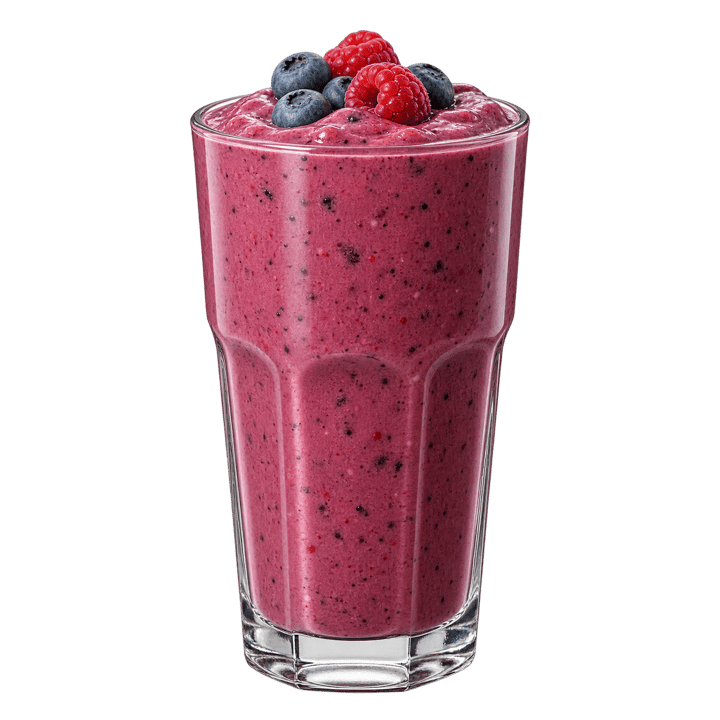
The home glass isn’t low in sugar. It has a cup of milk, a banana and a cup of strawberries, and that’s about 40 g. But none of it is added, it comes with 30 g of protein and 6 g of fiber, and it clears all six meters for an A where the Caribbean Way grades a D. How much sugar is in my smoothie? stacks up any glass the same way, and has a game, Which has more sugar?
The sugar in each ingredient
| Ingredient | Sugar | Counts as added |
|---|---|---|
| 1 medium banana | 14 g | no |
| 1 cup frozen strawberries (5 oz) | 7 g | no |
| 1 cup frozen blueberries | 13 g | no |
| 1 cup mango | 23 g | no |
| 1 cup pineapple | 16 g | no |
| 1 Medjool date | 16 g | no |
| 1 cup 2% milk | 12 g | no |
| 1 cup orange juice | 21 g | no, but it’s juice |
| 1 cup apple juice | 24 g | no, but it’s juice |
| 1 tbsp honey | 17 g | all of it |
| 1/2 cup vanilla ice cream | 14 g | counted as added |
| 1 tsp table sugar | 4.2 g | all of it |
| 12 oz cola | 37 g | all of it |
Two things in that table surprise most people. One Medjool date has more sugar than a banana. And a cup of milk has more sugar than a cup of frozen strawberries, though none of the milk’s counts as added.
Why we stop at two portions of fruit
Fruit sugar isn’t added, but we still limit it, because of what a glass does that a bowl of fruit doesn’t. You can drink three portions of fruit in a few minutes, where you’d take a while to eat them, and calories you drink do less to fill you. In a small study published in 2000, 15 adults who got an extra 450 calories a day as soda for four weeks ate no less of anything else and gained weight. When the same calories came as jelly beans, they ate less to make up for it.
Two portions already bring a lot. A banana and a cup of frozen strawberries have about 21 g of sugar, a banana and a cup of mango about 37 g. A third portion adds more sugar and no protein. In Build your glass, whole fruit counts on the Glucose meter as slow sugar, at half the weight of honey or juice, so a third portion costs less than a spoon of honey does, but it adds up, and the one change offers to halve the fruit once a glass goes past two portions. The guideline’s fruit goal is 2 servings a day at 2,000 calories, so two portions in a glass is a good share of the day’s fruit already.
A fruit portion, by our rule, is a medium banana, about a cup of frozen fruit, or two Medjool dates.
Juice
The guideline doesn’t count 100% juice as added sugar, but it says “100% fruit or vegetable juice should be consumed in limited portions or diluted with water”, and it tells you to eat fruit “in their original form”. A cup of orange juice has 21 g of sugar and half a gram of fiber. A cup of milk in its place has 8 g of protein and 12 g of sugar, none added. Our builder counts juice as fast sugar on the Glucose meter, the same as honey, and swapping it for milk is one of the first changes it tries.
Sweeteners
Flavored protein powders and “no sugar added” bottled smoothies often get their sweetness from somewhere. The guideline also says to limit “low-calorie non-nutritive sweeteners”, and names aspartame, sucralose, saccharin, xylitol and acesulfame K. Check the label on a flavored powder, or use an unflavored one and let the fruit and a spoon of cocoa do the work.
Is sugar just sugar?
Once digested, the sugar in a banana and the sugar in a spoon of honey are much the same kinds of sugar. The difference is what comes with it. Whole fruit brings fiber and water, and blending keeps the fiber. Honey, syrup and juice bring sugar on its own. For the calorie side of the argument, does sugar make you fat? on bodyfat.guide goes through the trials, and meals.guide uses the same 10 g line for a plate.
6 sources
- US Department of Agriculture and US Department of Health and Human Services, Dietary Guidelines for Americans, 2025 to 2030, January 2026cdn.realfood.gov
- Smoothie King, The Caribbean Way, 20 oz, menu page, opened November 14, 2026smoothieking.com
- Jamba, Jamba Nutrition Spreadsheet, October 2026assets.ctfassets.net
- USDA FoodData Central, SR Legacy rows by FDC ID: granulated sugar (169655), regular cola (174852), honey (169640), orange juice (169098), apple juice (173933), banana (173944), frozen strawberries (168173), frozen blueberries (173950), mango (169910), pineapple (169124), Medjool date (168191), milk, 2% (171267), opened on nutritionvalue.orgnutritionvalue.org
- USDA Home and Garden Bulletin 72, Nutritive Value of Foods, 2002, vanilla ice cream (item 112)ars.usda.gov
- DiMeglio DP and Mattes RD, Liquid versus solid carbohydrate: effects on food intake and body weight, International Journal of Obesity, 2000pubmed.ncbi.nlm.nih.gov